

When to plant garlic UK-wide is usually mid-autumn to early winter, typically October to December. Mid-November is still a good time if the soil is workable and not waterlogged, because most varieties need one to two months at 0–10°C to form a proper, well-divided bulb. If the ground is frozen or sodden, wait for a drier spell, or start the cloves in pots or modules instead.
When to plant garlic UK: the short answer
The classic window for when to plant garlic UK gardeners rely on is mid-autumn to early winter. That usually means October, November and December, as long as you can get a trowel into the soil. Autumn-planted cloves root quietly through the winter, take their cold spell, and are typically ready to harvest from late spring to early summer. Some varieties are sold for planting in late winter and early spring, from January to late March; they still need a period of cold, but the harvest comes later, from mid-summer to early autumn.
The date on the calendar matters less than the state of the soil. Garlic rots in waterlogged ground, and it will not settle in frozen earth. In heavy clay, or in a wet Scottish or northern border, a raised bed, a deep pot, or modules in an unheated greenhouse or cold frame are often the safer start. Planting garlic also appears on our November garden jobs checklist; this guide is the full planting method behind that task.
In this guide you will find:
- Why garlic is planted in autumn in the UK
- Autumn and spring garlic, hardneck and softneck
- Is it too late to plant garlic in the UK?
- What month should you plant garlic in the UK?
- When to plant garlic UK in pots
- How deep and how far apart should you plant garlic?
- When to plant garlic in Scotland
- How to choose a planting method
- Limits and typical mistakes
- When to plant garlic UK: a checklist
- BioGreen raised beds and covers
- FAQ

When to plant garlic UK: timing, soil and method
Getting the month right is only the first decision. Garlic also needs a sunny, open site, soil that drains freely, and cloves planted the right way up at the right depth. The sections below cover why the cold spell matters, which type to choose, and how to plant in the ground, in a raised bed, in a pot or under a cover.
Why garlic is planted in autumn in the UK
Most garlic varieties need a cold period of one to two months at 0–10°C before they will split into a proper bulb of separate cloves. Plant in mid-autumn to early winter and that cold arrives naturally while the roots are already in the ground. Miss the cold spell, and a common result is a single, undivided bulb rather than a cluster of cloves.
Autumn planting also gives the cloves a head start. They put down roots while the soil is still workable, then sit through winter and put on growth as soon as the days lengthen. That is why autumn-planted garlic is usually ready earlier than spring-planted crops, from late spring to early summer, once the leaves have turned yellow.
The Royal Horticultural Society notes that most garlic varieties need one to two months at 0–10°C (32–50°F) for good bulb development, and lists failure to divide into cloves as a common problem when the winter has not been cold enough. That is why a mid-November planting in workable soil is still in time in most of the UK.
Autumn and spring garlic, hardneck and softneck
Buy named planting garlic from a garden centre or seed supplier, not a supermarket bulb. Check the packet for the planting season, then choose a type that matches your site:
- Autumn-planted garlic. The usual UK crop, planted from mid-autumn into early winter, and in some catalogues from October into January if the ground is still open. Advantage: the longest cold spell and the earliest harvest, typically late spring to early summer. Disadvantage: wet winter soil can rot cloves, so drainage matters more than with a spring planting.
- Spring-planted varieties. Sold for late winter and early spring, often from January to late March. Advantage: you can wait if the autumn border is waterlogged or frozen. Disadvantage: the harvest is later, from mid-summer to early autumn, and the bulbs can be smaller if the cold spell was short.
- Hardneck garlic. Produces a flowering stem, or scape, in early summer, which you can cut and cook. Often stands a colder winter well. Storage life is usually shorter than softneck. Harvest when the lower leaves begin to yellow or brown.
- Softneck garlic. No scape, often a longer storage life, and a good fit for many milder UK gardens — well-known types include Solent Wight. Harvest when the stems weaken and begin to flop. Softneck and hardneck are both planted in the same autumn window unless the packet says otherwise.
Elephant garlic is planted in the same autumn period, but it is closer to a leek than to true garlic. The cloves are larger, the flavour is milder, and each plant needs more space. If you plant it, give it the same free-draining, sunny site, and allow wider spacing than for ordinary garlic.
Is it too late to plant garlic in the UK?
No — mid-November sits in the middle of the usual mid-autumn to early winter window, so it is not too late in most UK gardens if the soil is workable. You can often plant into December, and some autumn varieties can go in into January, provided the ground is not frozen or waterlogged. What stops you is the soil, not the date: if you cannot crumble it or it puddles after rain, wait, or plant into pots or modules instead.
If you miss autumn altogether, switch to a variety sold for late-winter and early-spring planting, and get the cloves in by late March. How late you can plant garlic in the UK therefore depends on the variety and on whether the cloves will still get enough cold before late spring. Planting in April is usually too late for a full-sized, well-divided bulb.
What month should you plant garlic in the UK?
October, November and December are the main months for autumn garlic in the UK. October is ideal if the soil is still warm and draining well; November is still firmly in season; December is fine on a mild, dry day when you can work the ground. January can work for some autumn types if the soil is open, and January to late March is the usual slot for spring-planting varieties. Always check the packet, and do not plant into frozen or sodden soil just to hit a month.
When to plant garlic UK in pots
You can plant garlic in pots in the same mid-autumn to early winter window as in the ground, or start cloves in module trays and move them out in spring. Use a pot at least 25 cm deep, filled with peat-free multi-purpose compost, and plant the cloves 15 cm apart with the tip 2.5 cm below the surface — the same depth and spacing as in a bed. The width of the pot decides how many cloves will fit; a wide trough holds more than a tall, narrow pot.
Stand pots where they will get winter light and will not sit in a saucer of rainwater. Containers dry out faster than borders in a dry spell, but they can also stay too wet if drainage is poor, so check both. Modules in a cold frame or an unheated greenhouse are a good answer when the garden soil is heavy: the cloves take their winter cold under cover, then you plant them out in spring. For other winter crops under glass, see what to grow in a greenhouse in winter.
How deep and how far apart should you plant garlic?
Split the bulb into individual cloves just before you plant, and set each clove with the flat, root end downwards and the pointed tip upwards. Space cloves 15 cm (6 in) apart, with the tip 2.5 cm (1 in) below the soil surface, and leave 30 cm (1 ft) between rows. In light, free-draining soil you can plant a little deeper, which can produce larger bulbs; do not plant deeply in heavy or wet soil, or the clove is more likely to rot. At 15 cm spacing and 30 cm between rows, that is about 22 cloves per square metre; a slightly wider spacing is better than crowding.
When to plant garlic in Scotland
The same mid-autumn to early winter window applies in Scotland, but the soil is often wetter and slower to drain, and the workable days can run out sooner. Plant while you can still work the ground, rather than waiting for a later date, and give drainage more weight than you would in a drier southern bed. A raised bed, a deep pot, or modules started under cover and planted out in spring are often more reliable than a heavy, low-lying border. Choose a hardy, named variety from a UK supplier, and do not plant into frozen or waterlogged ground.

How to choose a planting method
If your soil is light, sunny and drains well, plant straight into the ground. If it is heavy clay, sits wet after rain, or you only have a patio or balcony, lift the crop out of the wet: a raised bed or a deep container keeps the cloves above the winter water table.
A metal raised bed with legs and a drainage opening is built for that job. The FREISING XL raised garden bed measures 80 × 100 × 30 cm, sits on legs, and has a drainage opening so excess water can escape rather than collecting around the cloves. Please check availability. The smaller FREISING L is 80 × 60 × 30 cm if you have less space. Fill either bed with a free-draining mix, plant at the same 15 cm spacing, and site it in full sun. Do not fill the bed with recently manured soil, which can encourage the bulbs to rot.
Birds sometimes pull up newly planted cloves. Cover the bed or pot with plastic-free netting or horticultural fleece until the cloves have rooted and the shoots are well through, then take it off so light and air can reach the leaves.

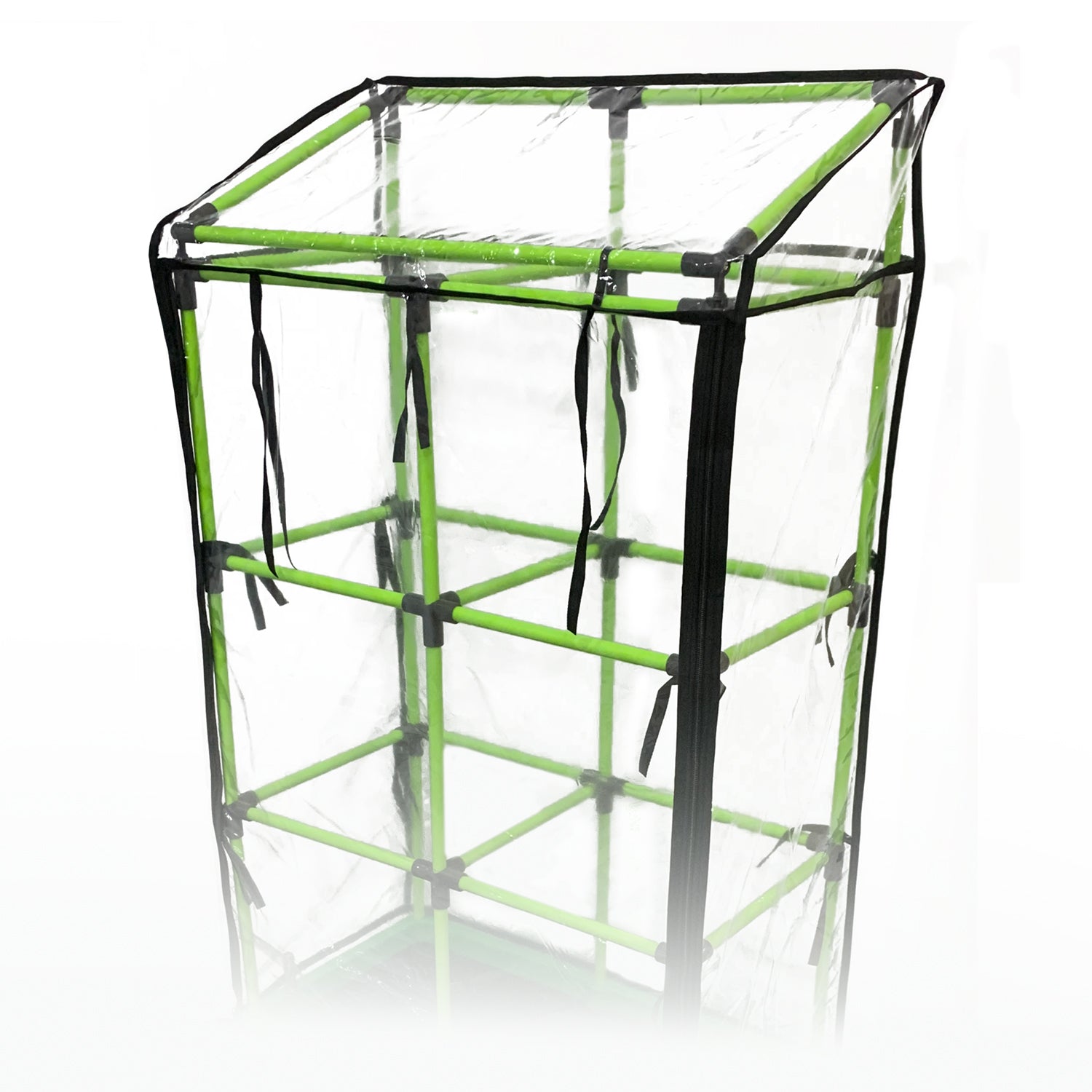
On a patio, the CITY JUNGLE raised garden bed is 62 × 33 × 128 cm including the trellis, holds 8.98 gallons of soil (about 34 litres), and has a 17-litre water tank with a level indicator. Please check availability. For garlic, treat the tank with care: the crop needs moisture, but it should not sit in wet compost all winter, so keep the reservoir low until growth picks up in spring. The matching cover for CITY JUNGLE and HEIDELBERG fits the trellis, opens at the front with two zippers, and can be rolled up and fastened at the top, or taken off altogether. Used over newly planted cloves it keeps off heavy rain and birds. Do not leave it zipped shut for weeks: garlic still needs the winter cold of 0–10°C, and stale, damp air under a closed cover encourages rot. Open the zippers on milder days, and remove the cover once the worst of the winter wet has passed. For fleece, cloches and other covers, see our guide to protecting plants from frost.
Limits and typical mistakes
Garlic is a straightforward crop, but a few errors show up every winter:
- Planting supermarket garlic. It may have been treated to delay sprouting, may carry disease, and may be a variety unsuited to a UK winter. Use named planting stock.
- Planting into recently manured or waterlogged soil, which makes the cloves more likely to rot.
- Planting upside down (flat end up) or too deep in heavy soil.
- Planting too early into warm, wet soil, or too late in spring for a variety that still needs a long cold spell. The result can be a bulb that does not divide into cloves.
- Leaving a cover sealed, or a self-watering tank full, so the compost stays wet and airless all winter.
- Leaving the crop in the ground after the leaves have yellowed. Late-lifted bulbs tend to open up and store less well. Lift with a fork, handle the bulbs gently, and dry them in a single layer in a warm, airy place below 30°C for two to four weeks before storing them somewhere cool and dry.
When to plant garlic UK: a checklist
Work through this list in autumn, and again at harvest time:
- Buy named autumn or spring garlic from a garden centre or seed supplier.
- Choose a sunny, open site with free-draining soil — or a raised bed, a pot at least 25 cm deep, or modules if the ground is heavy or wet.
- Plant in October, November or December if the soil is workable; use a spring variety from January to late March if you miss that window.
- Split the bulb just before planting. Set each clove pointed tip up, 15 cm apart, with the tip 2.5 cm below the surface, and 30 cm between rows.
- Do not plant into frozen, sodden or recently manured soil.
- Net or fleece the bed until the cloves have rooted, to stop birds pulling them up.
- If you use a cover, unzip it on milder days so the cloves still get winter cold and the air can move.
- Harvest when the leaves turn yellow: late spring to early summer for autumn-planted garlic, mid-summer to early autumn for spring-planted. Dry, then store somewhere cool and dry.
BioGreen raised beds and covers
These BioGreen products give garlic a free-draining home on a patio, balcony or in a wet garden. Please check availability on each product page.


FAQ
Can I plant garlic now in the UK?
Yes, if you are in the mid-autumn to early winter window and the soil is workable. Mid-November and much of December are still in time for autumn garlic. If the ground is frozen or waterlogged, plant in pots or modules instead, or wait for a drier spell. After that, switch to a variety sold for late-winter and early-spring planting, up to late March.
Can you plant supermarket garlic?
It is better not to. Supermarket bulbs may have been treated to stop them sprouting, may not be a variety suited to a UK winter, and can introduce disease. Buy named planting garlic from a garden centre or seed supplier, and plant those cloves instead.
When do you harvest garlic in the UK?
Harvest when the leaves turn yellow. Autumn-planted garlic is usually ready from late spring to early summer; spring-planted garlic from mid-summer to early autumn. Lift gently with a fork, dry the bulbs in a single layer in a warm, airy place below 30°C for two to four weeks, then store them somewhere cool and dry. Do not leave them in the ground once the leaves have yellowed, or the bulbs tend to open and store less well.
When to plant elephant garlic in the UK?
Plant elephant garlic in the same mid-autumn to early winter window as ordinary garlic, typically October to December, in a sunny, free-draining site. The cloves are larger and each plant needs more space than standard garlic. It is more closely related to leek than to true garlic, and the flavour is milder.
If your garden soil stays wet through winter, a raised bed with proper drainage gives garlic the cold spell it needs without sitting in a puddle. Browse the BioGreen raised beds and plant while the soil is still workable.