

Most hydrangeas in winter in a UK garden are dormant, not dead. Leave the faded flower heads on mophead and lacecap types until spring, because they shelter the buds that will flower next summer. Plants in pots need more help: move them to a sheltered spot or a frost-free greenhouse, water sparingly, and do not feed.
Hydrangeas in winter: the short answer
For hydrangeas in winter, the first job is to work out which type you have. Mophead and lacecap hydrangeas (Hydrangea macrophylla and H. serrata) flower on last year's wood. Their plump buds already sit just below the old flower heads, so an autumn or mid-winter prune removes next summer's display. Hydrangea paniculata and H. arborescens, including well-known forms such as ‘Limelight’ and ‘Annabelle’, flower on new growth and can be cut back harder — but the proper time is still late winter or spring, not in a November tidy-up. Climbing hydrangeas are pruned after they flower in summer, not in winter.
In the border, most garden hydrangeas will stand a typical British winter if you leave the heads on, mulch the roots and wait for hard frosts to pass before you cut. In a pot the roots sit above ground and freeze more easily, so the plant should be moved under cover or the pot insulated.
In this guide you will find:
- Why hydrangeas need a winter routine in the UK
- Ways to look after hydrangeas in winter
- Should you prune hydrangeas in winter?
- Should you deadhead hydrangeas in winter?
- What to do with potted hydrangeas in winter
- How to protect hydrangeas in winter in the UK
- Should you water hydrangeas in winter?
- Choosing the right winter care for your hydrangea
- Limits and common mistakes
- Hydrangeas in winter checklist
- BioGreen products for hydrangeas in winter
- FAQ: hydrangeas in winter
How to look after hydrangeas in winter: what actually matters
Three things decide how you should look after hydrangeas in winter. First, the type: mopheads and lacecaps must keep their old stems and flower heads until spring, while paniculata and arborescens can take a harder cut once the worst frost is over. Second, where the plant is growing: a shrub in the ground is far hardier than the same plant in a pot. Third, how cold and wet your site is. A sheltered courtyard is a different prospect from an exposed patio or a frost pocket.
Why hydrangeas need a winter routine in the UK
A hydrangea does not keep growing through a British winter. It drops its leaves, the stems harden, and the plant rests. What can go wrong is not that dormancy, but frost reaching the flower buds of mopheads and lacecaps, or ice and waterlogging around the roots of a plant in a pot. A late spring frost can also blacken those buds just as they begin to swell, which is why the old flower heads are worth leaving on until the hard frosts have passed. The dried heads look untidy by November, but they are doing a job: they stand over the buds like a small roof of papery bracts.
The Royal Horticultural Society advises leaving the faded blooms on mophead hydrangeas over winter, to give the tender growth buds below some frost protection. In early or mid-spring, once hard frosts have eased, cut each spent head back to the first strong, healthy pair of buds down the stem.

Ways to look after hydrangeas in winter
These are the main approaches, with their pros and cons:
- Leave them in the border, flower heads on: The usual method for hardy mopheads and lacecaps in the ground. Pros: almost no work, and the old heads protect the buds and look attractive in frost. Cons: the shrub looks bare once the leaves drop, and a late frost can still damage buds after you have cut the heads off in spring.
- A harder spring prune for paniculata and arborescens: These types flower on new wood, so you can cut them back to a low framework, often to 25–60 cm, in late winter or spring. Pros: a tidy shape and strong new flowering shoots. Cons: an autumn cut leaves open wounds that frost can damage, so wait until the plant is fully dormant and the worst cold has passed.
- Move or insulate potted hydrangeas: Group pots against a house wall, wrap the pot (not the whole shrub in sealed plastic), or bring them into a porch, cold greenhouse or unheated garage. Pros: the roots, which are the vulnerable part, stay closer to frost-free. Cons: pots still need drainage, and a warm living room is a poor place for a plant that is trying to go dormant.
- A greenhouse, porch or low grow tunnel: Useful for pots that will not fit indoors, or for a cluster of compact plants. Pros: you can keep the air just above freezing and still give the plants light. Cons: an unheated greenhouse can still freeze on a hard night unless it is insulated and the heat is controlled, and a low tunnel will only cover short plants.
Should you prune hydrangeas in winter?
No: do not prune mophead or lacecap hydrangeas in winter. Leave the old stems and flower heads in place until early or mid-spring, then cut each spent head back to the first strong pair of buds. On an established plant, also take out one or two of the oldest stems at the base to make room for young growth.
The common mistake is to cut a mophead hard in November because the brown heads look finished. Those stems carry next summer’s flowers. A mophead that has been cut to the ground will usually grow strongly and then fail to bloom that year. Paniculata and arborescens types can be pruned harder, but even then late winter or early spring is safer than autumn, because fresh cuts are less exposed to frost. Climbing hydrangeas should be tidied after flowering in summer, not now.
If you are not sure which hydrangea you have, look at last summer’s flower shape before you cut anything. A big, round mophead or a flat lacecap with a frill of larger florets is almost certainly a macrophylla type and should be left alone until spring. Cone-shaped plumes are usually paniculata; large, loose, dome-shaped heads on green stems are often arborescens, such as ‘Annabelle’. When in doubt, wait until spring.
Should you deadhead hydrangeas in winter?
No, not on mopheads. Leave the faded flower heads on through the winter and deadhead in spring, cutting back to the first strong pair of buds. Lacecaps are a little hardier, and the faded heads can be removed after flowering if you wish, but leaving them on until spring does no harm and still gives the buds some cover.
The dried heads also give the border some structure on a frosty morning, which is a good reason not to strip them off in autumn even if they look brown. If a head snaps off in a storm, do not cut the stem any further; leave the remaining buds in place until spring.
What to do with potted hydrangeas in winter
Potted hydrangeas in winter are more vulnerable than the same plants in the ground, because the compost in a container freezes from all sides. Move the pot to a sheltered position, ideally against a south- or west-facing wall, out of the worst wind. Raise it on feet so excess water can drain, and keep the drainage holes clear. Wrap the pot with bubble wrap, hessian or fleece to insulate the roots, but do not wrap the whole shrub in a sealed plastic bag: trapped moisture leads to rot, and the old flower heads already protect the buds.
If a hard frost is forecast, the safest place is a bright, frost-free porch, conservatory, unheated room or greenhouse. A warm living room is usually too dry and too warm for a plant that should stay dormant. In a small greenhouse or cold frame, a terracotta frost guard such as the FireFly can take the edge off a cold night when used with the correct candles (sold separately); stand it among the pots but leave a safe gap. Please check availability. For a larger greenhouse, an electric heater on a thermostat is more reliable: the PALMA 2000 W greenhouse heater is sized for rooms up to about 12 m² and is IPX4 splash-proof, which matters in a damp greenhouse. The set includes the THERMO 2 digital thermostat, which you plug in between the socket and the heater and can set just above freezing. Please check availability on the product pages. Our guide to heating a greenhouse and the guide to insulating a greenhouse explain how to keep the space efficient. A min-max thermometer on the staging tells you whether it really stays frost-free on the coldest nights.

How to protect hydrangeas in winter in the UK
In the open ground, most garden hydrangeas do not need to be wrapped. Leave the flower heads on, clear rotting leaves from the crown, and put a mulch of leaf mould or compost around the base — not piled up against the stems — to buffer the roots. Only in a very exposed or frost-prone site is a loose fleece over the upper buds worth considering on the coldest nights, and it should come off again once the frost has passed so the plant can breathe. For a wider look at fleece, cloches and covers, see our guide to protecting plants from frost.
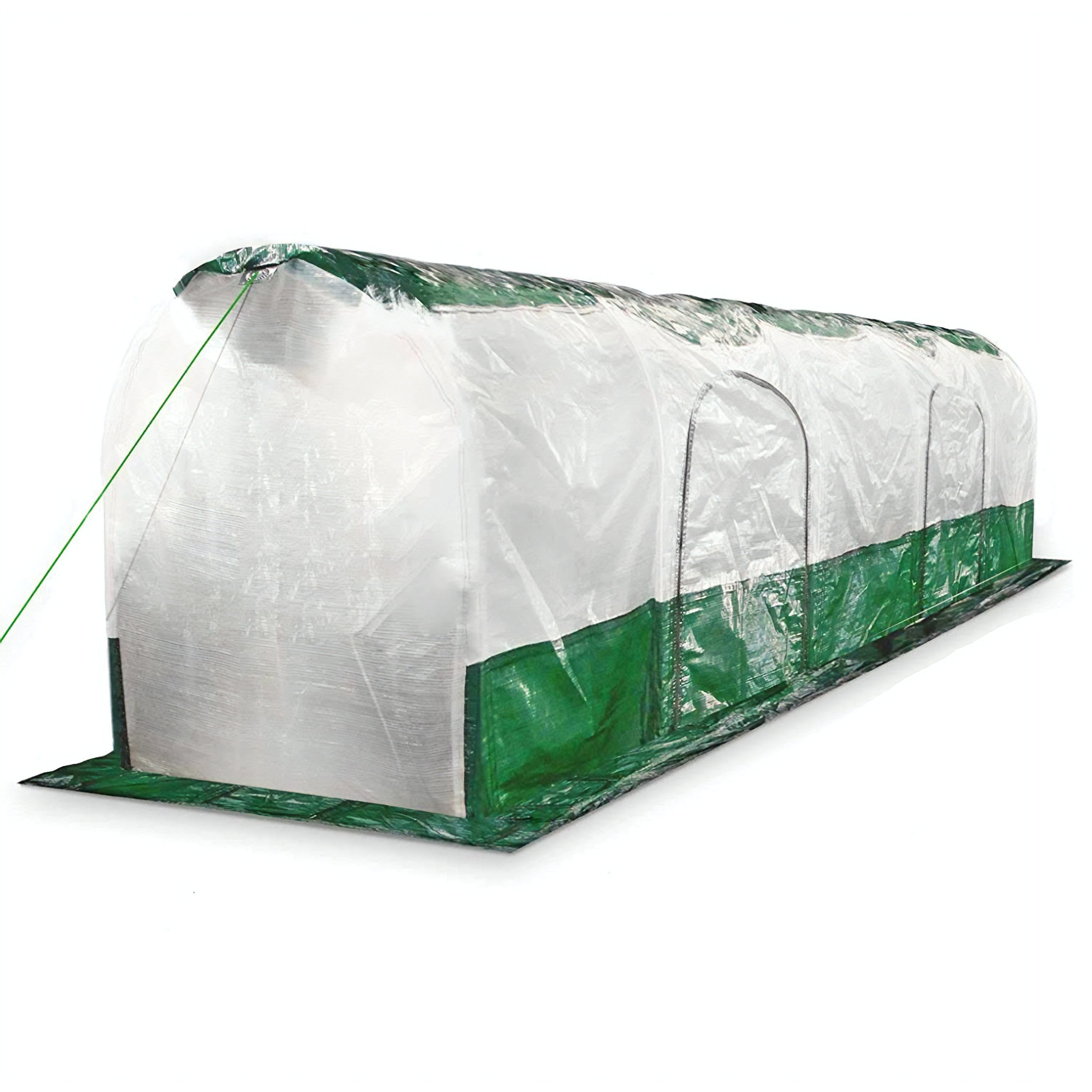
On a patio, compact potted hydrangeas can be grouped under a low grow tunnel for extra cover, provided they actually fit. The Super Dome grow tunnel is about 3.0 m long, 70 cm wide and 80 cm high (118 × 28 × 31 inches), with a 90 g/m² film, a 4 mm stainless-steel frame and two side openings for ventilation. That height is the limit: a full-sized mophead in a large pot will be too tall, but shorter plants can sit inside, and the side openings stop the air becoming stale and wet. Please check availability. Do not seal the tunnel shut for weeks on end; lift a door on milder days so moisture can escape.

Should you water hydrangeas in winter?
Yes, but much less often than in summer, and only when the compost or soil is dry. Hydrangeas in winter are resting, yet the roots and woody stems still suffer if the rootball dries out completely, especially in a pot under a porch or in a greenhouse where rain cannot reach them. Check the compost with a finger every week or two and give a little water on a mild day if it is dry, then let the surplus drain away. Never leave a pot standing in a saucer of water in frost: waterlogged, frozen compost is a common way to lose a container plant.
In the border, rainfall is usually enough. Only water during a dry spell, and do it in the morning so the soil surface can dry before night. Do not feed in winter; wait until growth starts again in spring.
Choosing the right winter care for your hydrangea
Use this overview to decide what to do:
- Mophead or lacecap in the border: leave the flower heads on, mulch the roots, and prune in spring.
- Paniculata or arborescens (such as ‘Limelight’ or ‘Annabelle’): leave them standing through mid-winter, then cut back in late winter or spring.
- Climbing hydrangea: do not prune now; tidy it after flowering in summer.
- Any hydrangea in a pot: move it to shelter, insulate the pot, keep the drainage clear, and water sparingly.
- Pots you can house under cover: a frost-free porch, garage or greenhouse, with heat only as a frost guard.
- Short patio pots that will not fit indoors: a low grow tunnel with the vents opened on milder days, or a cold frame.
Limits and common mistakes
The usual reasons a hydrangea fails to flower the following summer are a hard prune at the wrong time, or a late frost that kills the buds after the old heads have been removed. Other frequent problems are easier to avoid:
- Cutting mopheads or lacecaps back in autumn or mid-winter, which removes next year’s flowers.
- Leaving a pot standing in water, or wrapping the whole plant in sealed plastic, both of which encourage rot.
- Feeding in winter, which pushes soft growth that frost can damage.
- Assuming a leafless, brown-headed plant is dead. Scratch a stem gently: green tissue underneath means it is still alive.
- Expecting a low grow tunnel to cover a large shrub. At about 80 cm high, the Super Dome will not take a full-sized mophead.
- Relying on an unheated greenhouse without checking the night-time minimum. Insulation and a thermostat-controlled heater are what keep it frost-free, not the glass alone.
Hydrangeas in winter checklist
Run through this list in late autumn and again in spring:
- Identify the type: mophead or lacecap, paniculata, arborescens, or climber.
- Leave mophead and lacecap flower heads on until early or mid-spring.
- Mulch the roots of plants in the ground, keeping the mulch off the stems.
- Move pots to a sheltered wall, wrap the pot, and check that water can drain.
- If you use a greenhouse, check with a min-max thermometer that it stays frost-free.
- Water only when the compost is dry, and never feed until spring.
- In spring, cut each old mophead or lacecap head back to the first strong pair of buds, and remove one or two of the oldest stems at the base.
- Prune paniculata and arborescens in late winter or spring, once the hardest frosts have passed.
BioGreen products for hydrangeas in winter
These BioGreen products help to keep potted hydrangeas frost-free in a greenhouse, cold frame or on the patio. Please check availability on each product page.


FAQ: hydrangeas in winter
Short answers to frequent questions about hydrangeas in winter:
Are hydrangeas winter hardy in the UK?
Yes, most garden hydrangeas are hardy enough to stay in the ground through a typical UK winter. What often fails is not the plant itself but the flower buds of mopheads and lacecaps, which a late frost can kill. Potted plants are less hardy than the same types in the border, because their roots freeze more easily.
Do hydrangeas die in winter, or lose their leaves?
They lose their leaves and go dormant; they do not normally die. Bare stems and brown flower heads in winter are what a deciduous hydrangea should look like. Scratch a stem gently if you are unsure: green tissue underneath means the plant is still alive. New leaves appear in spring.
Are hydrangeas evergreen in winter?
No. The hydrangeas grown in most UK gardens are deciduous and drop their leaves in winter. A leafless shrub with last year’s flower heads still attached is the normal winter appearance, not a sign that the plant has failed.
Should you feed hydrangeas in winter?
No. Do not feed hydrangeas in winter. Feeding now encourages soft growth that frost can damage. Wait until new growth starts in spring, then use a feed suited to hydrangeas if the plant needs it.
You can bring a potted hydrangea under cover for the winter — a bright, frost-free porch, greenhouse or unheated room is fine — but a warm living room is a poor place for a dormant plant. Container plants can also be planted in a mild winter spell if the ground is not frozen or waterlogged, although spring is often kinder. Hydrangeas do not flower in winter: the brown heads you see are last summer’s blooms, left on for protection.
Looking after hydrangeas in winter in the UK comes down to type, timing and frost: leave mophead and lacecap heads on until spring, give pots shelter and drainage, water only when the compost is dry, and prune at the right moment. With those steps, and a frost-free spot for container plants, the buds should be ready to flower again next summer.