

Olive trees can get through many British winters, but a tree in a pot and a young plant need more protection than an established olive in the ground. The aim is not to keep the tree warm, but to shield it from hard frost and, just as importantly, from cold, waterlogged compost. This guide explains olive tree winter care in the UK, from fleece and pot wrapping to a frost-free greenhouse or garage.
Olive tree winter care: the short answer
For reliable olive tree winter care in the UK, give the tree a sunny, sheltered position, protect the roots if it is in a pot, and water far less often so the compost stays only slightly moist. Many established olives in the ground tolerate short spells of around −5 to −10 °C, although severe or prolonged frost can still damage leaves and branches. Container-grown trees are more vulnerable because their roots sit above ground: move them against a south- or west-facing wall, wrap the pot, or bring them into a bright, frost-free greenhouse, conservatory, porch or garage before the first hard frosts, typically from late October to early November.
In this guide you will find:
- Why olives need a careful winter routine in the UK
- Three ways to overwinter an olive tree
- Are olive trees winter hardy in the UK?
- Should you cover an olive tree in winter?
- How do you look after a potted olive tree in winter?
- Where should you put an olive tree in winter?
- How often should you water an olive tree in winter?
- Which winter care suits your olive tree?
- Limits and common mistakes
- Olive tree winter care checklist
- BioGreen products for olive tree winter care
- FAQ: olive tree winter care
What olive tree winter care depends on: pot or open ground
The right winter routine depends first on where the tree is growing. An established olive planted against a warm wall in a sheltered garden is in a very different position from a young tree in a small pot on a windy patio, even if both are the same variety. Work out which situation you have, then choose protection to match.
Why olives need a careful winter routine in the UK
The cultivated olive (Olea europaea) comes from a Mediterranean climate of hot, dry summers and mild, relatively dry winters. In the UK it meets the opposite problem in the cold months: not only frost, but weeks of wet weather, short days and cold winds. Olives are evergreen, so the leaves continue to transpire in winter and dislike sitting in saturated compost. Wet, frozen roots are a more common cause of losses than a single sharp night, especially in containers. Young trees, recently planted specimens and anything in a pot therefore need more attention than a mature tree that has already spent several winters in the ground.
Three ways to overwinter an olive tree
There is no single method that suits every garden. These are the three main options, with their advantages and drawbacks:
- In the ground, in a sheltered spot: Choose a well-drained site against or near a sunny south- or west-facing wall and plant in spring, as the RHS recommends. Pros: the soil insulates the roots, and an established tree often needs little more than a fleece wrap in a severe frost. Cons: you cannot move the tree, so an exposed or frost-pocket site is a poor choice, and young plants still need extra protection in their first winters.
- In a pot, outdoors with protection: Stand the pot in the sunniest, most sheltered place you have, raise it on pot feet and wrap the container in hessian or fleece before hard frosts. Pros: the tree can be moved, and this works well in milder southern and coastal gardens. Cons: roots in a pot freeze far more quickly than roots in the ground, and persistent rain can waterlog the compost.
- Under cover, frost-free: Move the pot into a bright, cool greenhouse, conservatory, porch or frost-free garage for the coldest months. Pros: the most reliable option for young trees, small pots, and colder or inland gardens. Cons: you need space and enough daylight; a dark, heated living room is usually a worse home than a cool, bright porch.
The RHS notes that many olives are hardy, but that severe frosts can still damage branches, and that pot-grown trees should be stored in a frost-free place or have their branches covered with horticultural fleece. Heavier grades of fleece typically give about 2 °C of protection.
Are olive trees winter hardy in the UK?
Yes, many olive trees can survive a UK winter, but hardiness is not a guarantee and it varies with the tree and the site. Established plants in the ground in a sheltered garden often tolerate short spells of around −5 to −10 °C. Leaves and thinner branches can still be damaged by a severe or prolonged frost, by cold wind, or by a sudden freeze after a mild spell. Named cultivars differ, so it is worth asking the nursery how your particular tree has been grown. Young olives, recently planted trees and anything in a pot are less hardy than a mature, well-rooted specimen. In colder inland gardens, in Scotland and in exposed or frost-pocket sites, even a tree that is often described as hardy is safer with extra protection or a frost-free place under glass.
Can olive trees stay outside in winter? An established tree in the ground, in a sunny, sheltered, free-draining position, often can. A potted tree may stay outside in a mild, sheltered garden if the pot is wrapped and kept well drained, but it is more likely to need moving under cover when a hard frost is forecast.
Should you cover an olive tree in winter?
You do not need to keep an olive tree covered all winter as a matter of course. Cover it when a hard frost is forecast, or if the tree is young, in a pot, or in an exposed position. Horticultural fleece over the canopy gives a few degrees of protection; wrap the pot as well, because that is where a container-grown tree is most vulnerable. Avoid wrapping the trunk or crown in material that stays wet for days, and take the fleece off again once the severe weather has passed so that light and air can reach the leaves. For a wider look at fleece, cloches and other frost protection, see our guide to protecting plants from frost.
If you fleece the canopy, use a breathable horticultural fleece and secure it so wind cannot chafe the branches. Check after rain that the fabric is not sitting sodden against the leaves.
How do you look after a potted olive tree in winter?

A potted olive needs more winter care than one in the ground, because the root ball can freeze from all sides. Before the first hard frosts, move the pot to the sunniest, most sheltered place you have, ideally beside a south- or west-facing wall that releases a little stored warmth at night. Raise the pot on pot feet so surplus water can escape, and remove any saucer that holds standing water. Wrap the outside of the pot with hessian, fleece or another insulating material, but keep the drainage holes clear. Do not repot in winter unless drainage has completely failed; leave major potting work until spring.
If the pot is small, or you garden in a cold or exposed area, move the tree into a bright, frost-free greenhouse, conservatory or porch for the coldest weeks. A Frost Guard FireFly can give gentle radiant heat in a small greenhouse or cold frame: place pots around it, leave a safety gap, and only light a candle when frost protection is needed. Candles are not included, and you should check availability on the product page.
Where should you put an olive tree in winter?
The best winter position is bright, sheltered and well drained. Outdoors, that usually means a south- or west-facing wall, a sheltered courtyard or a spot under a slight overhang, provided the tree still receives plenty of light. Avoid low-lying frost pockets and places where rainwater collects.

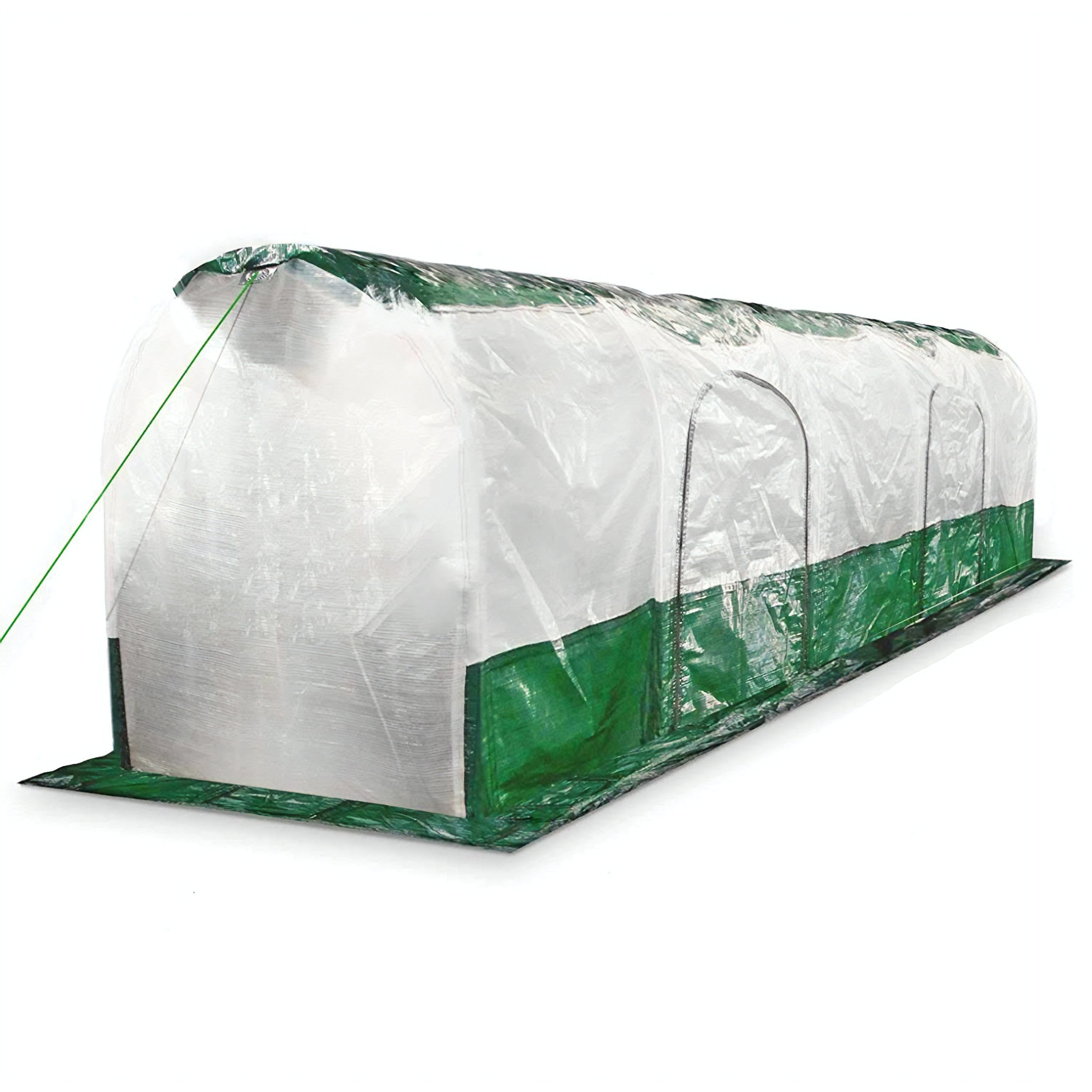
Under cover, choose a cool, frost-free place with as much daylight as possible: a greenhouse, conservatory, bright porch or a garage with a window. An unheated but frost-free space is better than a warm, dark room. If you use a polytunnel, check the height first. The Grow Tunnel Super Dome SD300 measures about 300 × 71 × 79 cm (the listed size is 118 × 28 × 31 inches), with a 4 mm stainless-steel frame, 90 g/m² film, shading in the roof and two side openings for ventilation. It can shelter a young, compact potted olive that fits under the 79 cm height, but a taller standard tree will not fit. Please check availability on the product page.

A greenhouse is only reliably frost-free if you monitor the temperature at plant level. On clear, still nights an unheated structure can drop below freezing even when the day has felt mild. Our guides on how to insulate a greenhouse and how to heat a greenhouse explain how to keep a small greenhouse just above freezing with as little energy as possible. The PALMA electric greenhouse heater (2000 W, thermostat adjustable from 0 to 60 °C, fan-only setting, 163 m³ of air an hour, 1.9 m cable, IPX4 splash protection, UK three-pin plug) is sized for rooms up to 12 m² at a typical 2 m height. Where there is no electricity, the Gas Greenhouse Heater 340 W runs on propane at 340 W, is intended for small greenhouses up to 3 m² or a cold frame, has a thermal fuse and a stainless-steel housing, and is supplied without a thermostat. Electric heaters in a greenhouse should only be run from a weatherproof supply protected by an RCD. Check availability on each product page.
If several tender plants share the same frost-free space, our guides on how to overwinter fuchsias and how to overwinter chilli plants cover the slightly different routines those plants need.
How often should you water an olive tree in winter?
Water an olive tree much less often in winter than in summer. Keep the compost only slightly moist, not wet and not bone dry. Check the surface and a little way below it before you water: a dry crust can hide a still-damp root ball, especially in a large pot. If the compost is only just moist, wait. When you do water, wet the compost rather than the foliage, let the excess drain freely, and empty any saucer after a short time. Outdoor pots need this discipline even more in a wet British winter than in a frost, because cold, waterlogged compost leads to root rot. Do not feed while the tree is resting; start again in spring when new growth appears.
Which winter care suits your olive tree?
- Established tree in the ground, sheltered south- or west-facing site: usually leave it in place, keep the soil well drained, and fleece the canopy only when a hard frost is forecast.
- Tree in a large pot, mild or coastal garden: move it against a warm wall, wrap the pot, raise it on pot feet, and have fleece ready for severe nights. Bring it under cover if a prolonged freeze is forecast.
- Young tree, small pot, or a cold, inland or exposed garden: move it into a bright, frost-free greenhouse, conservatory, porch or garage before the first hard frosts.
- Standard or half-standard olives: treat them as more tender than a bushy tree of the same variety, because the stem and head are more exposed; frost-free cover is the safer option.
- No frost-free indoor space and a tall tree that will not fit under a low tunnel: protect the pot and, in a severe frost, the canopy with fleece, and accept that a very hard winter can still cause damage.
Limits and common mistakes
- Assuming every olive is fully hardy: site, age, pot size and the length of a cold spell all matter more than a general hardiness range.
- Leaving a pot sitting in a saucer of water: cold, wet compost is a common reason potted olives fail.
- Wrapping the tree in wet material and leaving it on: fleece should come off after the severe weather so light and air can reach the leaves.
- Bringing the tree into a warm, dark living room: low winter light and dry radiator heat stress an evergreen olive and encourage pests.
- Pruning hard in autumn or winter: the RHS recommends pruning olives in early spring, not as they go into the coldest months.
- Feeding in winter: a resting tree cannot use the fertiliser, and salts build up in the compost.
- Moving a pot-grown tree back outside too early: wait until the risk of frost has passed in your area, then harden it off for a week or two.
Olive tree winter care checklist
- Decide whether the tree will stay in the ground, stay in its pot outdoors, or move under cover
- Move potted trees to a sunny, sheltered wall before the first hard frosts
- Raise pots on pot feet and empty saucers so water can drain
- Wrap the pot, not just the branches, if the tree stays outside
- Keep horticultural fleece ready for severe frost forecasts
- Water only when the compost has begun to dry, and do not feed
- If you use a greenhouse, check the night temperature at plant level
- Leave pruning until early spring
- Inspect the tree now and then for damaged branches and pests
- Harden off and move pot-grown trees back outside only after the last frost
BioGreen products for olive tree winter care
These BioGreen products can help with frost protection under glass, in a cold frame or, for a compact young tree, under a low polytunnel. Please check availability on each product page.



FAQ: olive tree winter care
Short answers to frequent questions about looking after an olive tree in winter:
Why is my olive tree dropping leaves in winter?
Leaf drop in winter is often a response to cold, wet compost, a sudden move indoors, or much lower light, rather than a sign that the tree is dead. As long as the stems stay firm and show green tissue under the bark if you scratch a small area, the tree may recover in spring. Persistent waterlogging, however, can kill roots, so check drainage first.
When should you prune an olive tree in the UK?
Prune olives in early spring, once the worst of the frost has passed. Remove dead, damaged or crossing branches and, on a pot-grown tree, tip-prune to keep a balanced shape. Avoid a hard prune in autumn or mid-winter, when fresh cuts are more exposed to cold.
When can I uncover my olive tree or move it back outside?
Take fleece off after the severe weather has passed, rather than leaving it on for months. Pot-grown trees that have spent the winter under cover should only go back outside once the risk of frost has passed in your area, often from late April or May, and after a week or two of hardening off.
Can I keep an olive tree in a heated room over winter?
A warm living room is usually a poor place for a winter olive. The air is dry, the light is often too low for an evergreen canopy, and pests such as scale and spider mites build up more easily. A bright, cool, frost-free porch, conservatory or greenhouse is a better choice than a spot beside a radiator.
Olive tree winter care in the UK is mainly about shelter, drainage and a little protection at the right moment. Keep the compost on the dry side, protect the pot if the tree is in a container, fleece the canopy only when a hard frost is coming, and give young or potted trees a bright, frost-free place if you can. The tree will be in a stronger position to put on new growth in spring.